
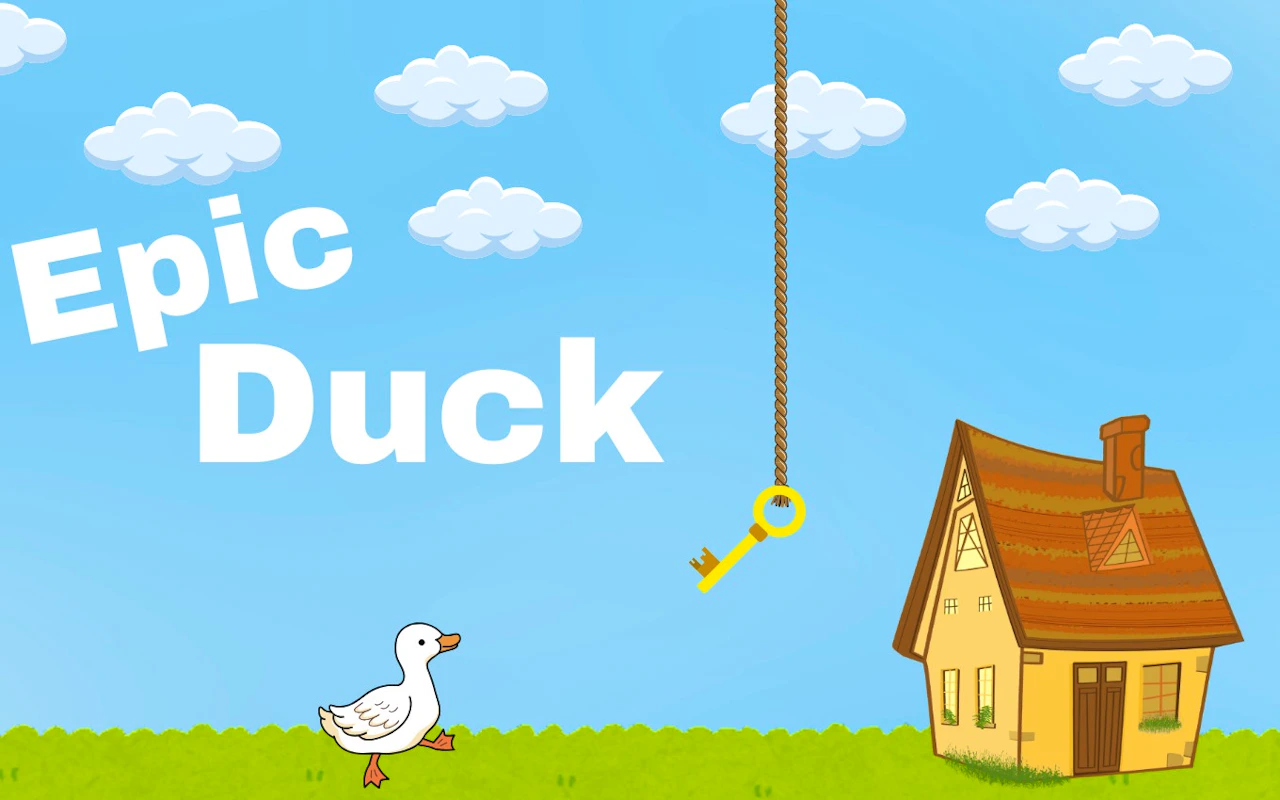
About Epic Duck
Keys and doors give Epic Duck its shape. This is less an action game than a set of small spaces that each hold something you need, and the challenge is working out the order to do things in, then executing it without mistiming a jump. Progress is gated rather than scored, so a level ends when you have found the way through, not when a clock runs out.
How to play
You explore a level, find the key it is hiding, and use it to open the route onward, handling hazards along the way. The rhythm is look, plan, move. The usual early mistake is treating it as a platformer to be sprinted through, then losing to something you would have spotted by spending five seconds reading the layout first.
Tips
- Sweep the edges of a level before committing to the obvious path. In games built this way the key sits in the corner you had no other reason to visit.
- Before entering a section that needs precise timing, watch one full cycle of whatever is moving. The pattern is usually shorter and more regular than it looks.
- When you get stuck, the missing piece is more often somewhere you have already been than somewhere you have not. Retrace before pushing forward.
Who it's for
This asks for a longer sitting than a score-chasing arcade game, perhaps fifteen or twenty minutes to make real progress, and it rewards patience as much as reflexes. It is desktop-first and much better with a keyboard than on a phone screen. Players who want something quicker will get more from Gelatino, and Parmesan Partisan is the pick if you would rather shoot than solve.