
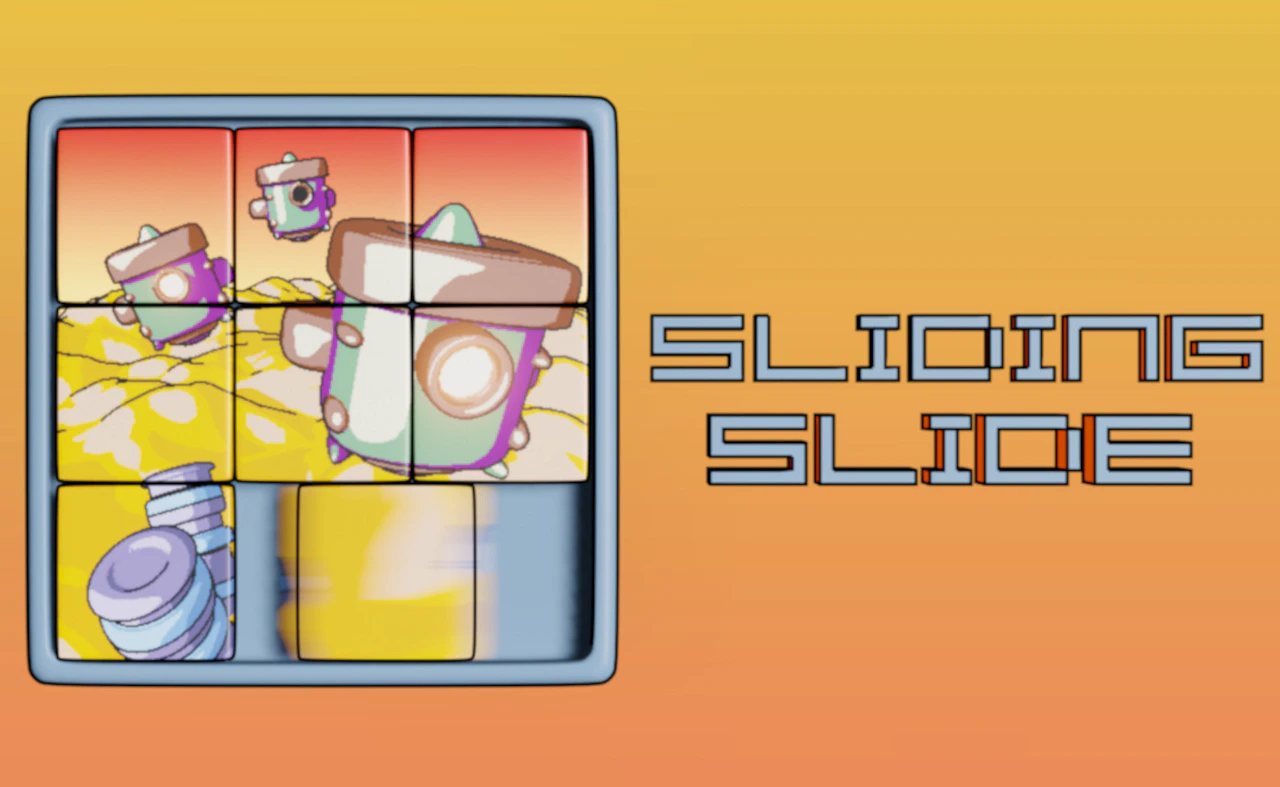

About Sliding Slide
The sliding tile puzzle is older than video games, and Sliding Slide makes no attempt to reinvent it. You get a picture broken into tiles with one empty square, a clock, and a difficulty setting; everything after that is the same mechanic people have been solving on cardboard for generations.
How to play
Tap or click a tile next to the gap and it slides in; that single move is the entire control scheme. The beginner trap is solving by appearance, pushing whichever tile looks closest to home, which works until the last few pieces, where every fix breaks something already correct. The method that actually works is order: lock down whole rows and columns, then treat what remains as a smaller puzzle.
Tips
- Finish the top row first, then the leftmost column, and never disturb them again. Each one you complete shrinks the puzzle you still have to think about.
- For the last two tiles in a row, bring them to the corner as a pair and rotate them into place together rather than one at a time.
- Spend your first few seconds finding where the picture's high-contrast details belong. On larger grids, orientation is most of your time.
Who it's for
A grid takes a few minutes, and the difficulty settings stretch it from idle distraction to genuinely fiddly. There's no reflex element: it's patience and method, with the clock as the only thing hurrying you. It suits a phone, where tapping a tile beats aiming a cursor at one. If you'd rather have pressure than quiet, Parmesan Partisan is a defence game with upgrade choices to weigh, and Gelatino asks for timing and precise movement instead of planning.